School District: Service Design
The Challenge
The district relied almost entirely on paper-based, manual processes across its core administrative functions. Staff navigated fragmented systems, color-coded paper tracking, physical filing rooms, and basket mail — creating delays, errors, and zero visibility into process status.With a major enterprise system upgrade on the horizon, the district needed a strategic, user-centered vision to inform how these processes should be redesigned.
User Research
Roles we mapped
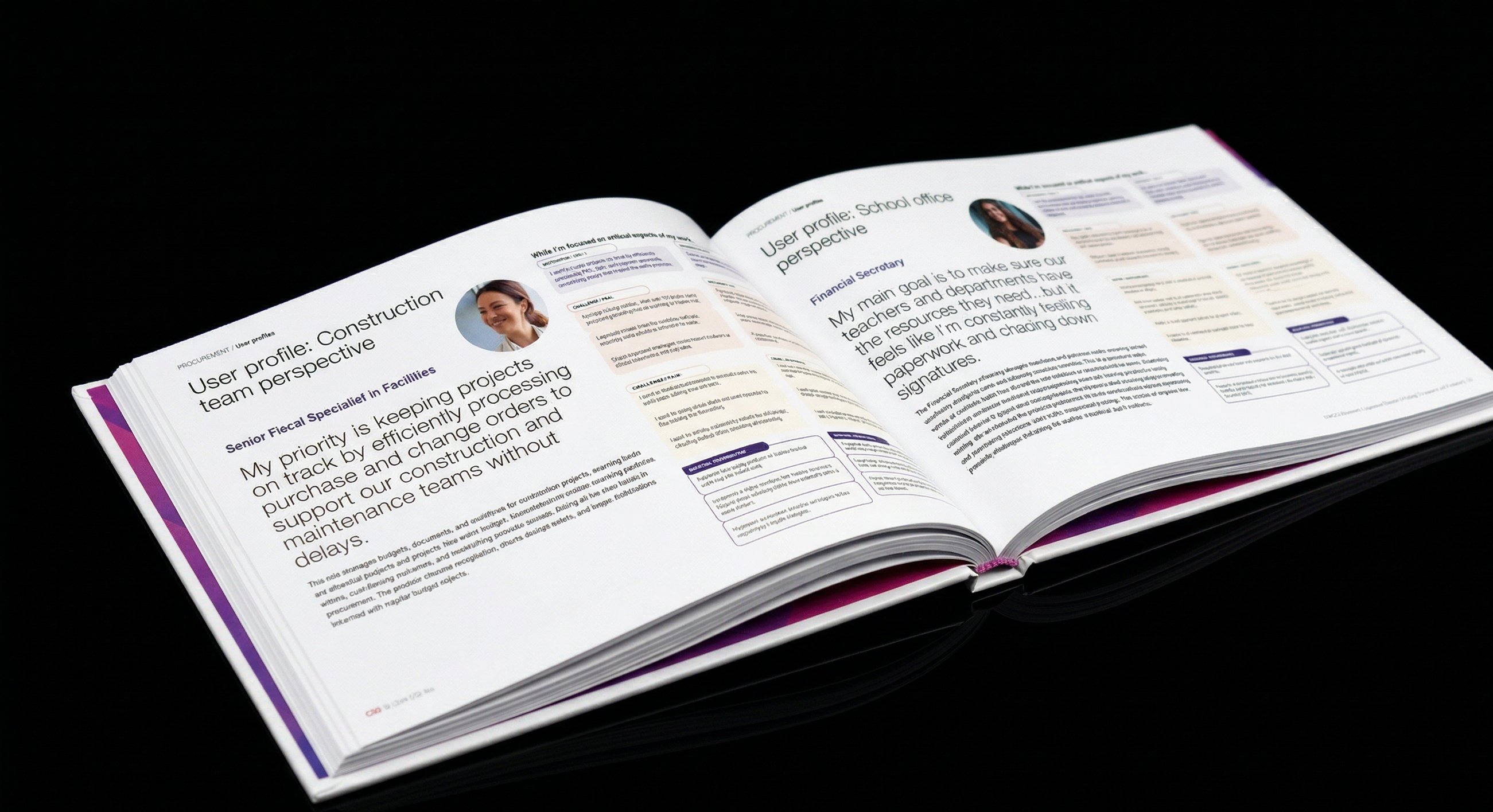
Conducted contextual inquiries with 17+ distinct user roles across three departments — from frontline school staff to department directors. Built synthesized mental models and detailed user profiles capturing each role's goals, pain points, desires, and behavioral patterns.
Current State Mapping
Conducted contextual inquiries with 17+ distinct user roles across three departments — from frontline school staff to department directors. Built synthesized mental models and detailed user profiles capturing each role's goals, pain points, desires, and behavioral patterns.
What we found
Dream State Design
Facilitated collaborative workshops with client stakeholders and technical subject matter experts to design 20+ future-state workflows. Key design concepts included:
Simplify
Reducing complexity at entry points
Unified digital forms
Replacing 7+ paper/digital format variations with a single configurable form

Smart validation
Using business logic to prevent errors at the point of entry

Self-service portals
Empowering external users (vendors, school staff) to submit directly into the system
Automate
Removing manual handoffs

Automated routing
Sending requests to the right approvers based on transaction type and value

Automated notifications
Replacing manual email distribution and follow-ups
Connect
Bridging systems and roles

Role-based views
Aggregating open tasks and eliminating paper tracking systems

Integration architecture
Connecting previously siloed systems for automatic data flow
Procurement
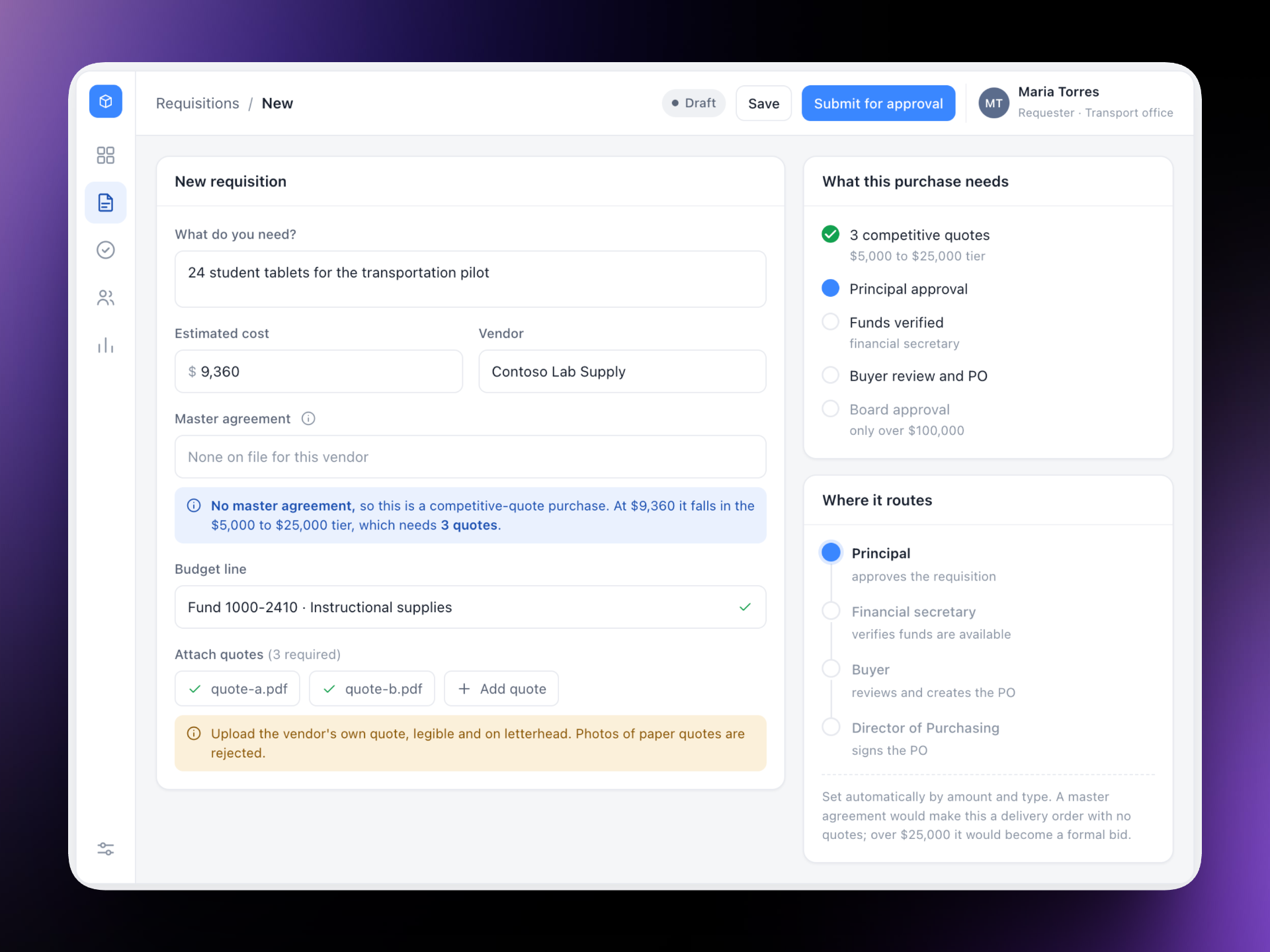
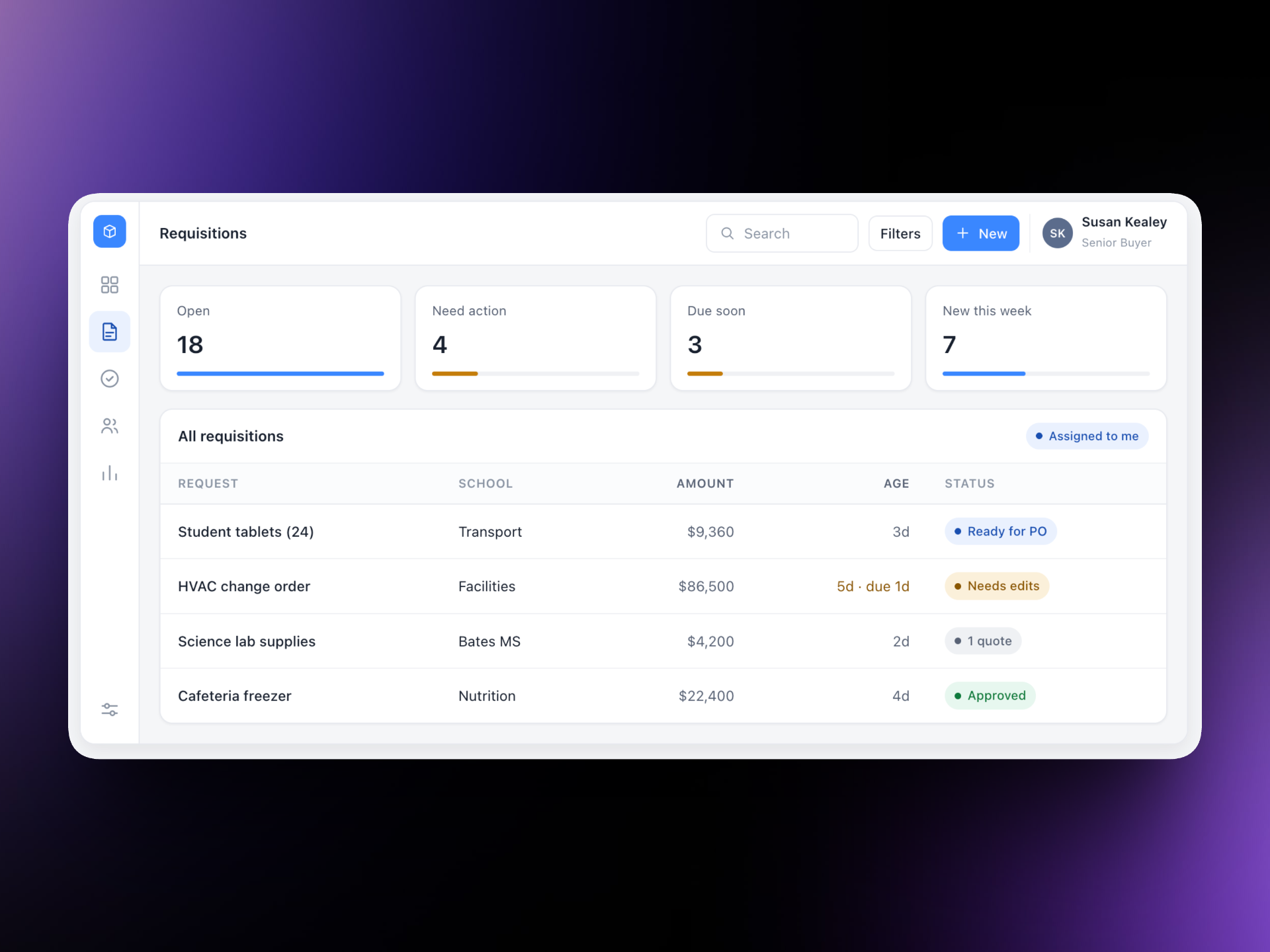
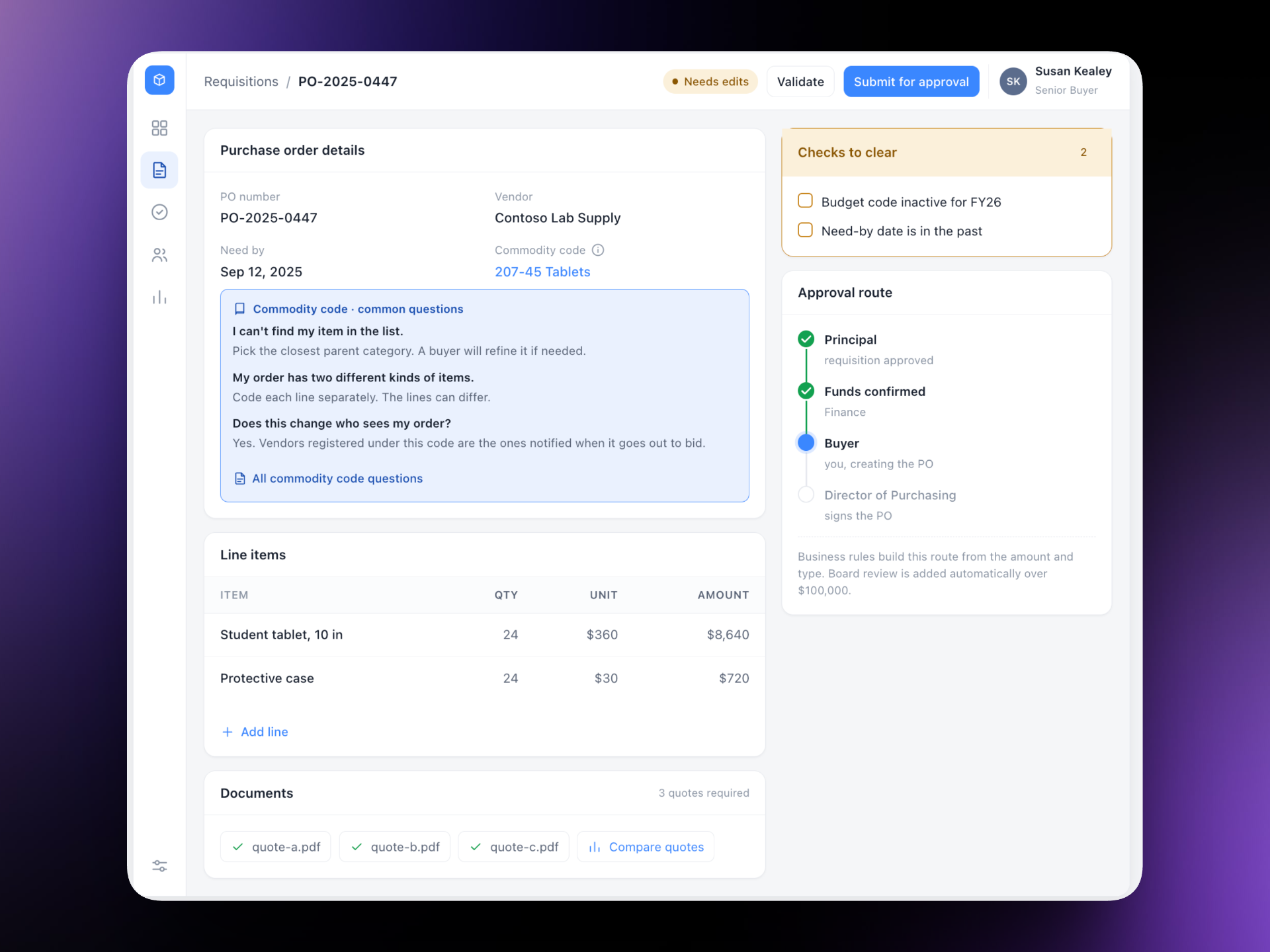
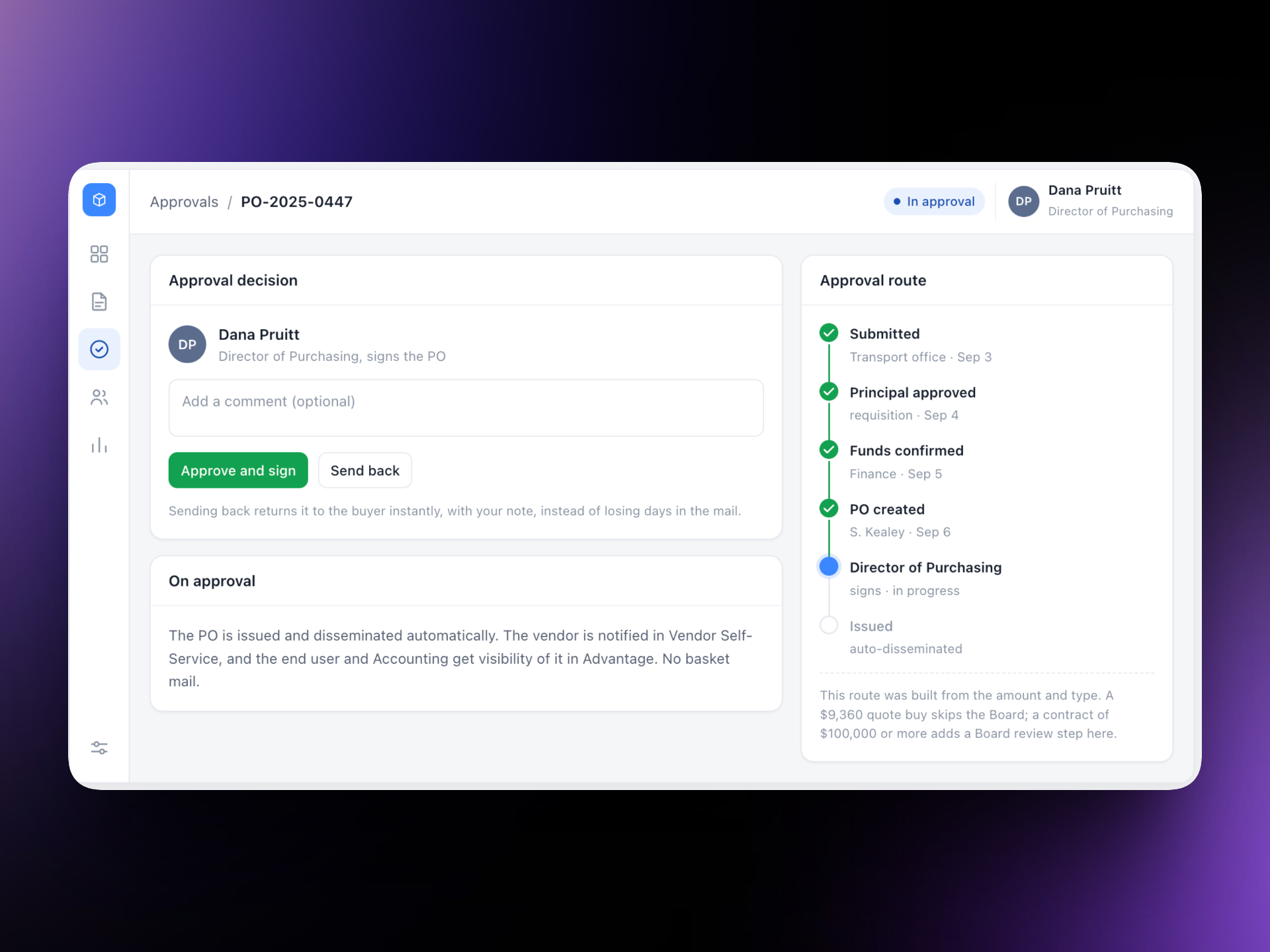
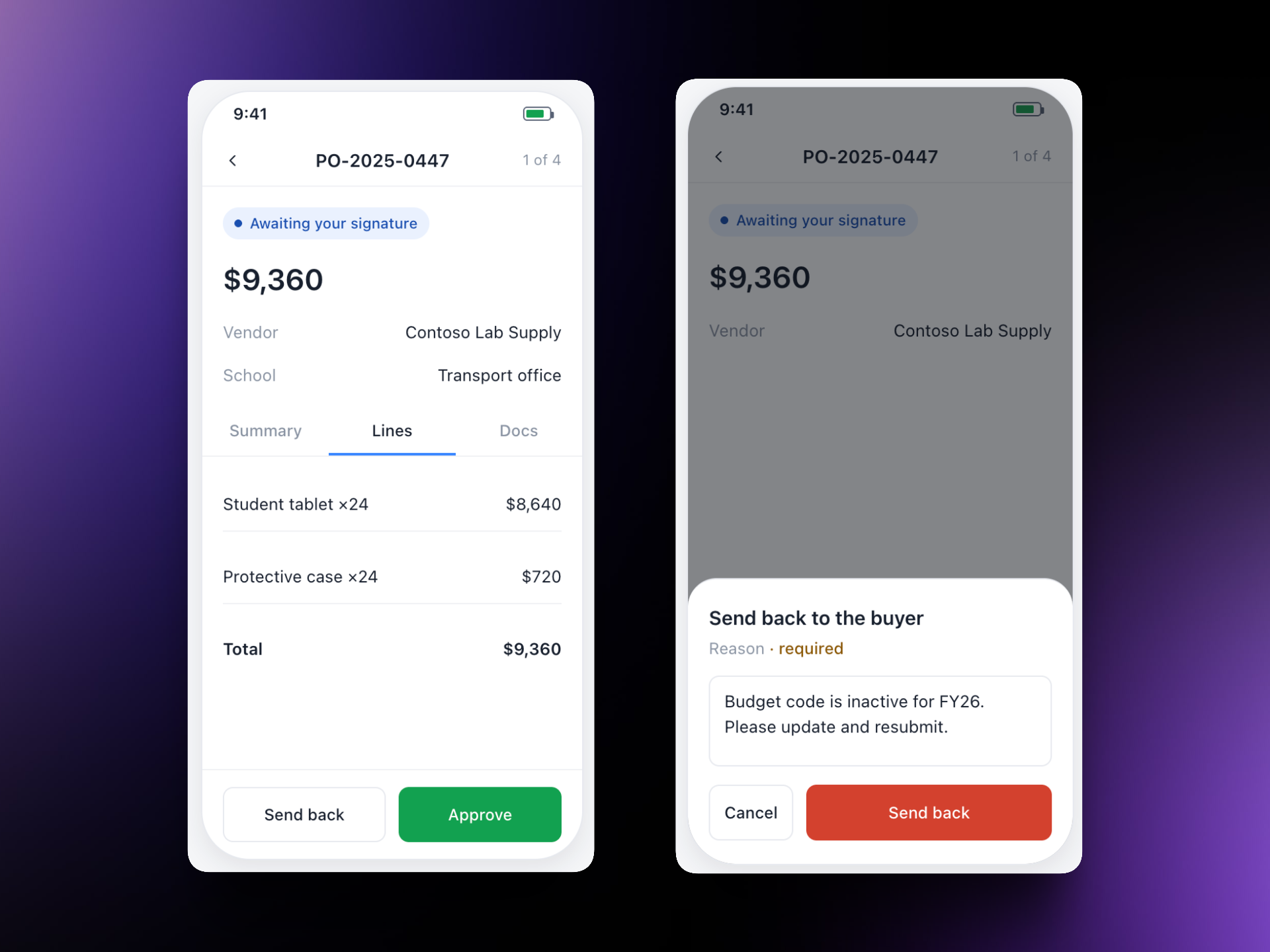
The request-to-purchase-order flow redrawn to the project's proposed future state on the updated software: smart forms that show only what applies, documents and routing set by business rules, and approvals that adapt to the purchase.
1. A school raises a requisition
2. The buyer's role-based worklist
3. Requisition becomes a purchase order
4. Approval, set by the purchase itself
5. Signing off from a phone
Three Workstreams
Each workstream was treated as a full service design engagement - from research through current state analysis, dream state design, and actionable recommendations.
HR Personnel Management
Redesigned the process for managing employee lifecycle actions (new hires, transfers, separations, role changes) across 7 existing format variations and 8+ tools. Designed a unified digital workflow with configurable approvals, automated downstream notifications, and consumer-friendly forms for non-HR users.
Procurement
Mapped 10+ procurement flows from school-level purchases to complex competitive bids and construction change orders. Designed an end-to-end digital procurement experience including smart forms with auto-population, a vendor self-service portal, digital signatures, and real-time contract tracking dashboards.
Travel & Expense
Redesigned the reimbursement process from paper forms and manual mileage calculations to an automated digital workflow with integrated mapping software, real-time budget validation, pre-populated employee data, and automated status notifications.
Recommendations
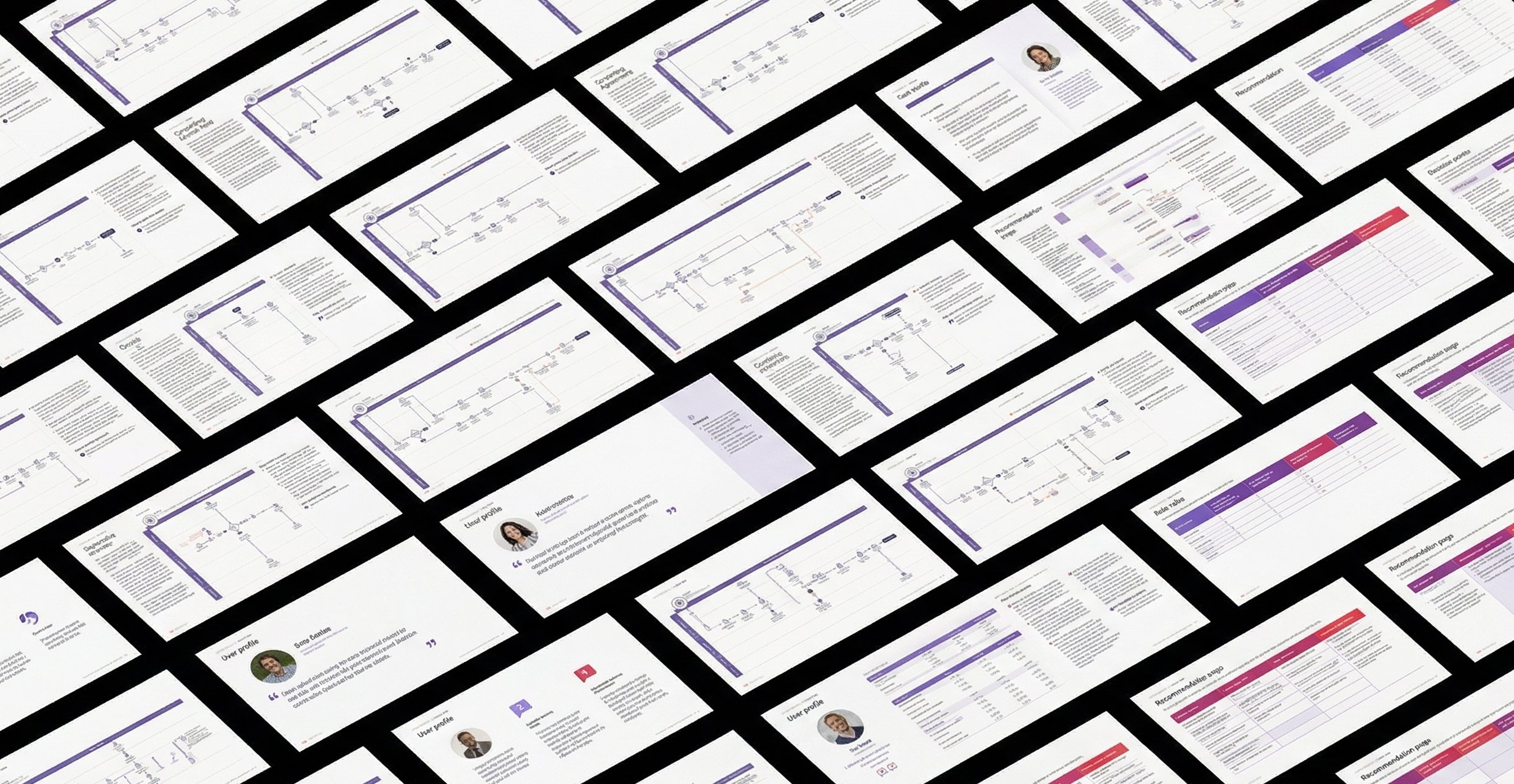
Each workstream was treated as a full service design engagement - from research through current state analysis, dream state design, and actionable recommendations.

System Limitations & Usability
Improvements to address gaps between user expectations and system capabilities
Visibility & Tracking
Enhancements for real-time status visibility across departments

Paper-to-Digital Transitions
Workflow redesigns eliminating manual, paper-based processes

Redundancy Elimination
Removing duplicate data entry and parallel tracking systems

Training & Knowledge Gaps
Solutions for institutional knowledge loss and onboarding

External User Engagement
Self-service portals for vendors and school staff
Impact
Work directly informed the technical configuration and change management strategy for the enterprise upgrade.
“
The strategy book will be really helpful in directing our efforts in the right direction.
"
- MOJ, Director
“
"Getting everyone to come together to share how tech helps them do their job and unanimously agree to what needs to be done is a major piece that has been missing for me."
"
- DOR, System Analyst
“
"A lot of my work is telling new hires, transfers and temp how to work with our systems. And correcting the errors they make. I am so happy to be done with all of that."
"
- JR, Purchasing Technician